









Oil & Gas Terminals Explained: The Role of Storage in Global Energy Trading
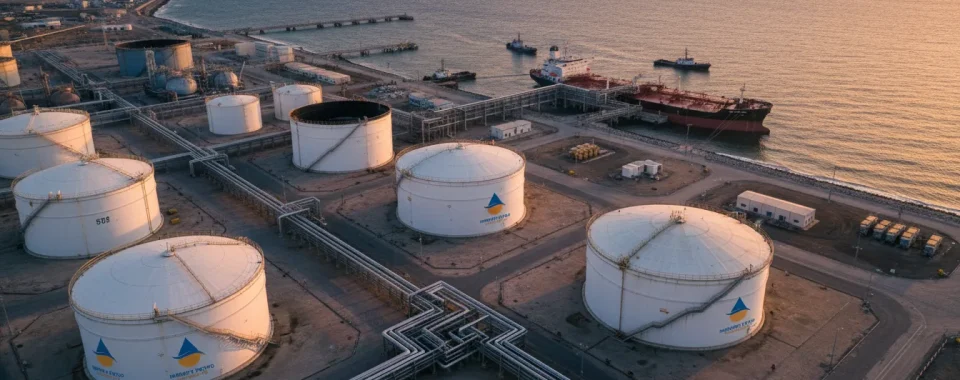
Oil and gas terminals play a critical but often overlooked role in global energy markets. Beyond being simple storage points, terminals function as strategic assets that enable supply flexibility, price optimization, and reliable trade execution across international markets.
Understanding how terminals operate—and why storage capacity and location matter—helps traders, buyers, and investors make more informed decisions in an increasingly volatile energy environment.
What Is an Oil & Gas Terminal?
An oil and gas terminal is a specialized facility designed for the storage, handling, and transfer of energy products such as crude-related products, refined fuels, gas-related products, and petrochemicals. These terminals typically include storage tanks, loading arms, pipelines, and port access for marine transportation.
Terminals allow energy products to be stored safely before being redistributed to domestic markets or exported internationally, making them essential links in the global energy supply chain. U.S. Energy Information Administration – Oil & Gas Infrastructure
Why Storage Capacity Matters in Energy Markets
Storage capacity directly affects how energy traders and buyers respond to market conditions. When markets are volatile, access to storage allows companies to delay sales, manage inventory, and reduce exposure to sudden price movements.
Larger storage capacity enables:
-
Better inventory control
-
Supply continuity during disruptions
-
Strategic timing of cargo releases
In regions with high trading activity, terminals with significant capacity often become key commercial hubs.
Industry Perspective: Terminal Infrastructure in the UAE
The UAE has developed one of the most advanced energy logistics ecosystems in the region. Companies such as Infinity Petro Ventures FZE operate terminal infrastructure in key locations like Hamriyah, contributing to regional supply stability and global trade connectivity.
Through structured terminal operations, storage management, and integrated trading execution, such facilities support both regional and international energy flows.
The Importance of Strategic Terminal Locations
Location is as important as capacity. Terminals positioned near major shipping lanes allow faster access to international markets and reduce transportation risk.
Ports such as Hamriyah (Sharjah) benefit from proximity to major global trade routes, enabling efficient connections to Asia, Africa, and beyond. This geographic advantage supports smoother cargo movement and more resilient supply chains. UNCTAD – Maritime Transport & Energy Trade
Interested in learning more about energy terminals, storage strategies, or physical trading infrastructure?
Explore industry insights or connect with energy professionals to better navigate today’s global energy markets.